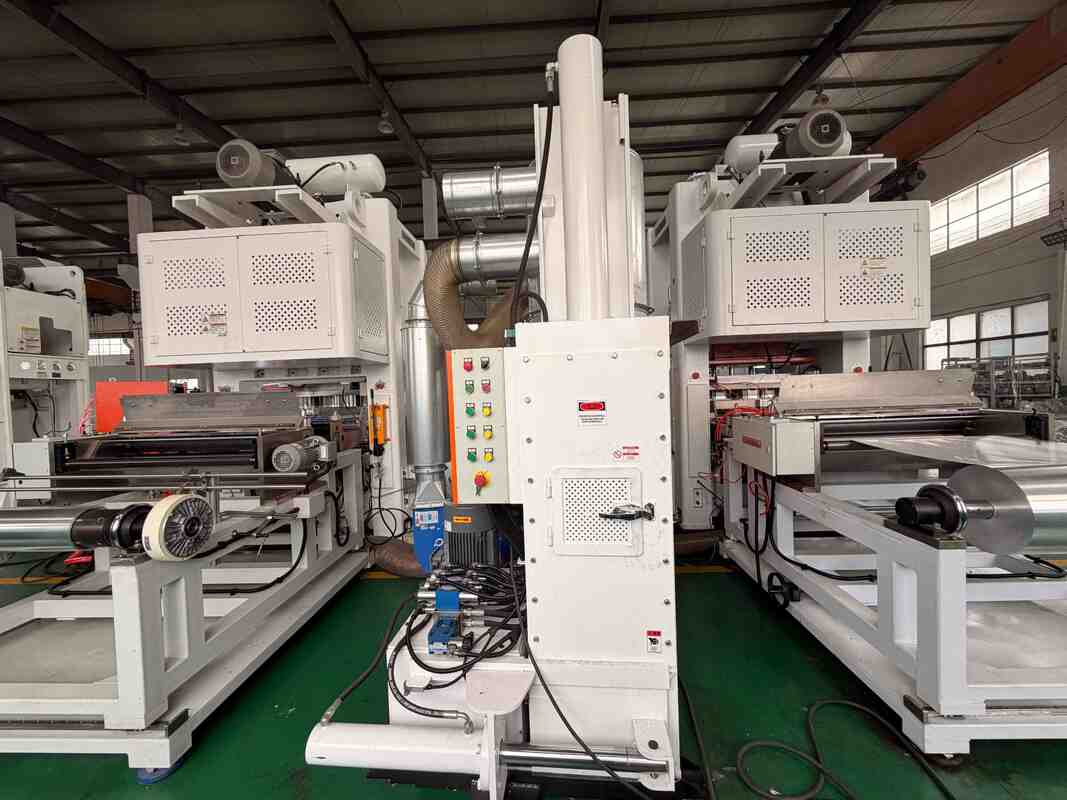
| Brand Name: | LIKEE |
| Model Number: | LK-T80 |
| Price: | $45000-75000/set |
LK-T80 Aluminum Foil Container Machine for Rectangle & Round Trays
![]()
The LK-T80 Aluminum Foil Container Machine is designed for the diverse needs of food packaging manufacturers. Its core strength lies in the ability of a single machine to produce a wide range of aluminum containers—from standard squares and rounds to special shapes—whether they are wrinkled (beaded) containers for added rigidity or smooth-walled containers for a premium finish, all achievable by changing the corresponding molds.
The machine itself features a standardized design, but its true flexibility comes from its modular mold system. Customers can order custom molds to produce containers of different shapes, sizes, and structures based on market demands. When switching product types, operators follow a standard procedure to change the complete mold set, with no structural modifications required to the main machine.
Through optimized ergonomic and functional design, the LK-T80 simplifies the operation of complex machinery, making it standard practice for one person to efficiently manage a high-performance machine, offering a practical solution for reducing costs and increasing efficiency in your factory.
| Wrapping Method | Automatic |
| Max. Production Speed | 12000 pcs/hour |
| Main Material | High Precised Steel |
| Workplate Dimension | 1250*1000MM |
| Operational Mode | Fully Automatic |
| Thickness | 30micron~200micron |
| Frequency | 50Hz |
| Color | WHITE AND ORANGE |
| Feeding Accuracy | ±0.1mm |
| Model | LK-T80 |
| Main Motor | Siemens |
Advantages of the "One-Machine-Many-Products" Mold System:
Container Sample:
![]()
![]()
![]()
![]()
Q1: What types of aluminum containers can the LK-T80 produce?
A1: It can produce most common types on the market, including but not limited to square and round takeaway containers, airline meal trays, baking pans, pie plates, and custom-shaped containers.
Q2: Can it make both beaded (for strength) and smooth-wall containers?
A2: Yes, this is a key advantage. The machine can produce both. The difference lies primarily in the mold. Producing beaded containers requires molds with rib-forming structures; producing smooth-wall containers uses polished molds. Switching production involves changing the corresponding mold set.
Q3: Is changing from one container type to another a complex process?
A3: The core task is changing the mold set. This requires operators to use tools like a crane for handling, followed by re-calibration and debugging. For a skilled team, the entire process can typically be completed within a few hours. The machine's control system can store parameters for different molds for easy recall.
Q4: Does the machine itself require major modifications for different products?
A4: No. The machine host (frame, drive, controls) is universal. Product variation is achieved entirely by changing the forming molds; the host structure remains unchanged.
Q5: Are there issues producing irregular shapes or very deep containers?
A5: As long as it is within the machine's maximum forming pressure and stroke limits and the mold is well-designed, production is possible. Irregular or deep-drawn containers require special evaluation and optimization during the mold design phase.