logo
Good price  online

products details

Created with Pixso. Home Created with Pixso. Products Created with Pixso.
Pop Up WAX Paper Folding Machine
Created with Pixso. Pop Up WAX Paper Folding Machine Silicone Paper Folder

Pop Up WAX Paper Folding Machine Silicone Paper Folder

Brand Name: LIKEE
Model Number: LKWP-980
Detail Information
Place of Origin:
Shanghahi, China
Certification:
CE, SGS, ISO9001, and ISO14001
Machine Type:
Pop Up Wax Paper Folding Machine
Paper Grades:
Pop Up Baking Sheets, Pop Up Silicone Sheets
Fold Pattern:
V-fold Plus Cross Fold
Air Pressure:
0.5–0.8 MPa
Highlight:

V-Fold Cross Folding Pop Up Wax Paper Folding Machine

,

Wax Paper and Silicone Paper Pop Up Paper Folding Machine

,

Serrated or Straight Cut-Off Wax Paper Folding Machine

Product Description
Product Overview

A common assumption is that a pop-up folder only runs one kind of paper. On the LKWP-980, the unwinding and tension sections are adjusted separately, so both wax paper and one-sided silicone paper run on the same machine. The two grades behave differently — wax paper is softer, silicone paper is slicker — so a grade change means retensioning the web, not modifying the machine. That is what lets one unit produce both baking liners and tray liners.

Folding governs how the sheets pull. The web is V-folded first, then cross-folded so adjacent sheets grip each other. Lift one sheet out of the box and the next one rises with it. If the fold angle is off, sheets either drag each other out in bunches or jam, which is why fold and cut-off settings matter more than raw speed.

Slitting sets finished width. The parent roll is up to 930mm wide and is cut into rows sized to the finished sheet. More rows mean more sheets per cycle. Tightly wound rolls or off-spec cores cause the unwind to wobble, which is what the tension control is there to hold steady.

Cut-off follows the end use. Serrated edges tear cleanly for hand-separated sheets; straight edges stay flat for automatic boxing. Both run on the same machine.

Finished sheets leave on a discharge conveyor that feeds straight into a boxing station. Everything is set from the touch screen — fold and slit parameters, plus running status on the same panel.

Technical Specifications
Specification LKWP-980
Finished unfolded sizeLength 270mm, other sizes customized
Finished widthSlitting within 950mm
Finished folded sizeFolded length 135mm, width within 950mm
Fold patternV-fold cross-folding, continuous extraction type
Cut-offSerrated or straight
Applicable raw material30–60 gsm wax paper or one-sided silicone paper
Paper core76mm (3 inch)
Roll diameter and web width≤φ800mm * maximum width 930mm
Output speedSingle-row 250–400 sheets/min * slitting rows
Control method7-inch touch screen
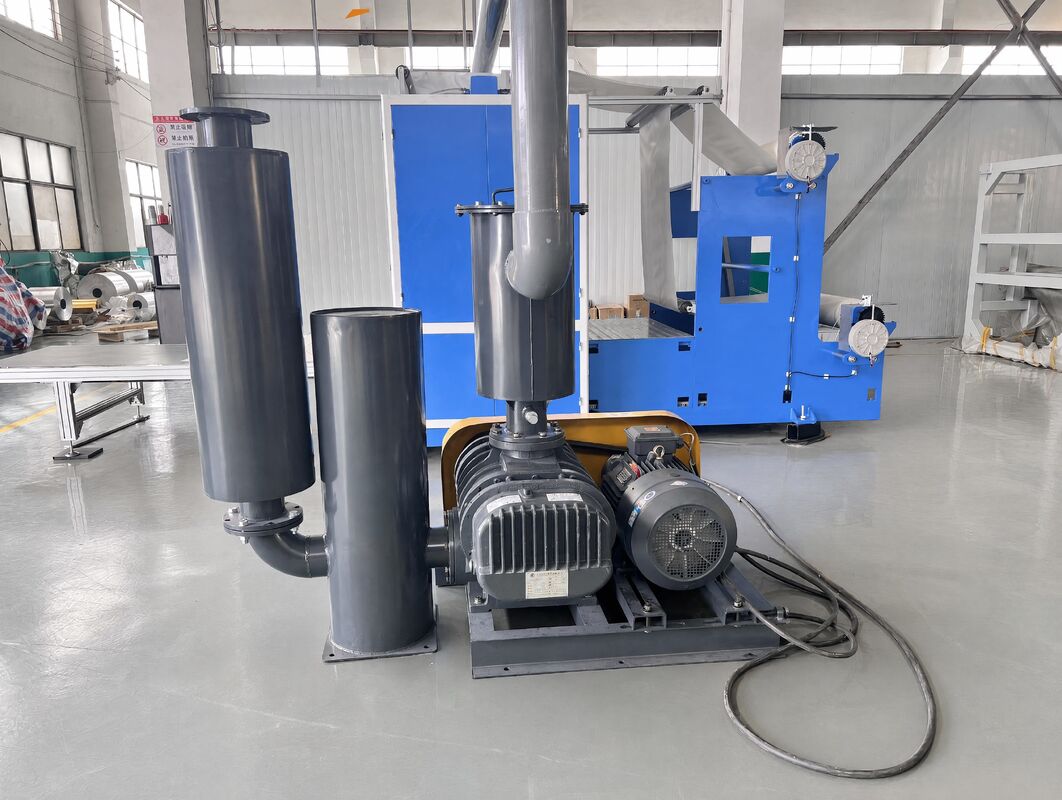
Roots fan motor380V 50Hz 11kW
Main motor380V 50Hz 4kW
Tension motor380V 50Hz 2kW
Discharge conveyor380V 50Hz 400W
Main machine size4200 * 2150 * 1950mm
Roots fan size2300 * 800 * 2600mm
Power supply380V, 50Hz, 3PH + N + E
Air pressure0.5–0.8 MPa, 300 L/min
Total gross weight6500kg
Functions & Advantages
Key Functions
  • Sectioned tension control: Unwind and folding sections are tensioned independently, so switching between wax paper and silicone paper needs no mechanical change.
  • Multi-row slitting: The parent roll is cut into rows within 950mm, producing several rows of sheets per cycle.
  • Two-stage folding: The V-fold shapes each sheet; the cross fold overlaps neighbours so they can be pulled one at a time.
  • Dual cut-off: Serrated and straight edges both run on the same machine, chosen by whether sheets are used by hand or boxed automatically.
  • Continuous discharge: Sheets leave without interruption, feeding directly to downstream boxing.
  • Central touch screen control: Fold, slit and count parameters plus running status on one panel.
Advantages
  • One machine, two paper grades: Wax paper and one-sided silicone paper both run, extending the same unit from baking liners to tray liners without a second purchase.
  • Pull-out reliability comes from the fold: Interlocking sheets hold their stack and release one at a time, which reduces bunching in use.
  • Width and row count combine freely: Changing a finished size means changing the slitting plan, not the machine.
  • Edge style follows the sales channel: Serrated for hand-separated packs, straight for automated boxing — even within one order.
  • Clear delivery spec: Motor, fan and conveyor ratings alongside machine footprints, so power, air and floor space can be planned ahead of arrival.
Frequently Asked Questions

Q1: Can this machine run both wax paper and silicone paper?

Yes. Wax paper and one-sided silicone paper from 30–60 gsm both run on the LKWP-980. They differ in stiffness and surface slickness, so a grade change means adjusting the tension setting — not swapping parts or buying a second machine.

Q2: How do the wax paper and silicone paper products differ?

The finished form is the same pop-up folded sheet; the difference is the paper itself. Silicone paper handles grease and heat better, which suits tray liners. Wax paper suits dry baking and general lining. The customer picks the paper for the job, and the machine stays as it is.

Q3: Why do the sheets come out one after another?

Two folds working together. The V-fold sets each sheet's shape, then the cross fold overlaps neighbouring sheets. Pulling the top sheet lifts the corner of the one beneath — that overlap is what makes the pack a pop-up.

Q4: Is the fold angle adjustable?

Yes, fold and slit parameters are set on the touch screen. The angle and overlap need to suit the paper grammage: thinner paper has less stiffness, so it needs more overlap or the sheets pull out in clusters.

Q5: How wide can it cut, and how many rows per cycle?

The parent roll can be slit into as many rows as the finished width allows, within a maximum web of 930mm. More rows mean more sheets per cycle, so output scales with row count.

Q6: Serrated or straight edge — which fits my product?

Look at what happens downstream. Packs that consumers tear by hand for home baking suit serrated edges. Products that feed an automatic boxing line and need a clean, even edge suit straight cut. Both run on the same machine.

Q7: How long does a paper change take?

A change is a roll swap plus tension adjustment and a check on the fold settings — normal changeover work. The machine itself never needs rebuilding because of a paper change.

Q8: Can the finished sheets go straight into boxes?

Yes. Sheets leave on the discharge conveyor, and its end is the infeed position for a boxing station. The boxer is a separate unit, and the two interfaces can be matched at the selection stage.

Q9: What happens if the paper is outside the recommended range?

Below 30 gsm the paper lacks stiffness: folds collapse and sheets pull out in bunches. Above 60 gsm the paper is stiff, folding becomes difficult and roll diameter is limited. Choose paper within the stated range.

Q10: What does the workshop need to prepare?

A 380V three-phase supply with neutral and earth, and 0.5–0.8 MPa air at 300 L/min. The machine ships as a main unit plus a Roots fan, so confirm floor space and access route dimensions before ordering.

Machine Operation & Product Application
LKWP-980 pop-up wax paper folding machine in operation showing the folding and slitting section Close-up of the LKWP-980 discharge conveyor feeding folded pop-up sheets toward the boxing station Finished pop-up wax paper and silicone paper sheets produced by the LKWP-980 folding machine
Certificate
Quality and compliance certificate for the LKWP-980 pop-up wax paper folding machine
Customer Case
Customer installation site of the LKWP-980 pop-up wax paper folding machine in production
Machine Video


Watch the LKWP-980 pop-up wax paper folding machine in operation, showing the V-fold cross-folding process, multi-row slitting, and continuous discharge to the boxing station.